Search is changing. People still use Google to find websites, compare businesses, and research services, but they are increasingly using AI-powered tools such as ChatGPT, Google AI Overviews, and Perplexity to ask questions and explore solutions.
This shift has created new terms in digital marketing, including AI SEO, Generative Engine Optimization (GEO), and Answer Engine Optimization (AEO).
As businesses explore these opportunities, one question keeps coming up:
Does AI SEO replace traditional SEO?
The short answer is no.
AI-powered search introduces additional ways for businesses to become visible online, but the foundations of traditional SEO remain important. Websites still need to be accessible, content still needs to be relevant and useful, and businesses still need to establish credibility.
The difference is how visibility is presented and measured.
In this guide, we compare traditional SEO and AI SEO, explain the relationship between SEO and GEO, and show how businesses can combine both approaches without wasting their marketing budget.
What Is Traditional SEO?
Traditional Search Engine Optimization (SEO) is the process of improving a website’s visibility in unpaid search engine results.
When someone searches for a product, service, or question on Google, the search engine displays relevant webpages based on its ranking systems.
Traditional SEO focuses on helping search engines discover, understand, and rank your website for relevant searches.
Its main activities include:
- Keyword research: Identifying the terms potential customers use when searching.
- Technical SEO: Improving crawlability, indexability, website structure, and technical performance.
- On-page SEO: Optimizing page titles, headings, content, URLs, and internal links.
- Content optimization: Publishing useful information that satisfies search intent.
- Off-page SEO: Building relevant authority through quality backlinks and brand references.
- Local SEO: Improving visibility for location-based searches and local customers.
For example, a business offering SEO services in London, Ontario, may want its service page to appear when someone searches for “SEO company in London, Ontario.”
Traditional SEO aims to improve the website’s opportunity to appear in relevant organic search results and attract qualified visitors.
What Is AI SEO?
AI SEO is a broad term used to describe strategies that improve a business’s visibility across AI-powered search and discovery experiences.
These experiences can include:
- ChatGPT Search.
- Google AI Overviews and AI Mode.
- Microsoft Copilot.
- Perplexity.
- Other generative AI-powered search and answer platforms.
Instead of presenting only a list of website links, these tools can generate conversational answers, summarise information, compare options, and sometimes cite supporting sources.
AI SEO focuses on making your website and business information accessible, understandable, relevant, and credible enough to be discovered or referenced in these experiences.
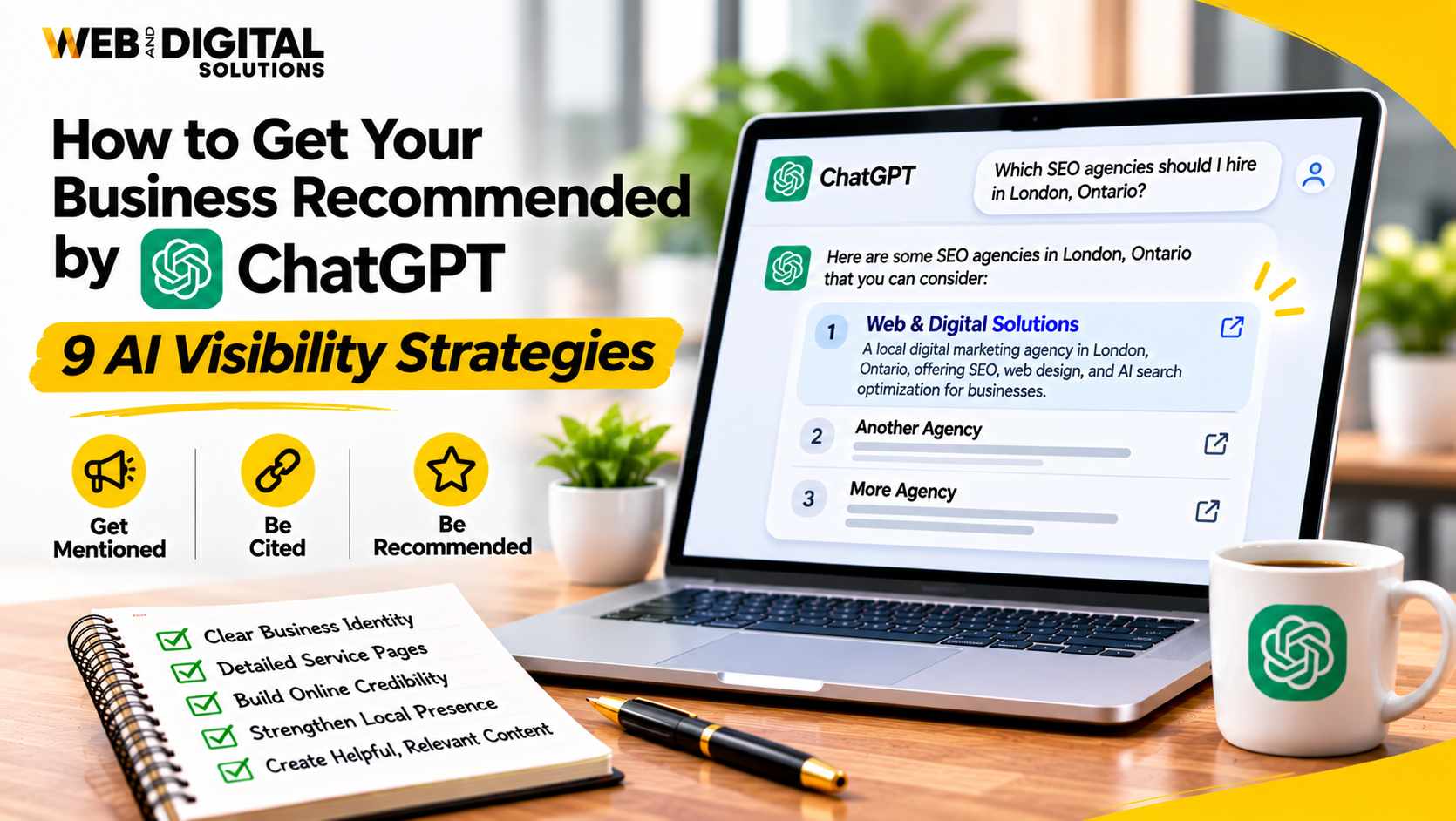
For example, someone might ask ChatGPT:
“Which digital marketing agencies offer SEO services in London, Ontario?”
The platform may generate an answer that mentions businesses and provides links to relevant sources.
A business with clear service pages, useful content, and a credible online presence may have an opportunity to be included.
However, there is no guaranteed method to make an AI platform mention or recommend a particular business.
What Is GEO, and How Is It Different From SEO?
Generative Engine Optimization (GEO) is a more specific term within the evolving AI search optimisation landscape.
GEO focuses on improving the likelihood that a website, brand, or its information will be discovered, mentioned, or cited in responses generated by AI-powered systems.
The distinction is easiest to understand through an example.
Imagine a potential customer wants to hire a web design company.
Traditional Google search:
The customer searches for “web design company London Ontario” and sees a list of relevant website results.
AI-powered search:
The customer asks, “Which web design companies in London, Ontario should I consider?”
An AI search experience may produce a conversational response, compare relevant information, and link to supporting websites.
Both experiences can help customers discover businesses, but the presentation and visibility signals are different.
GEO does not replace the technical and content foundations of SEO. It extends the focus to how information may be retrieved and used in generative AI responses.
AI SEO vs Traditional SEO: What’s the Difference?
The two approaches share many foundations, but their visibility objectives and measurement methods differ.
| Comparison area | Traditional SEO | AI SEO / GEO |
|---|---|---|
| Primary objective | Improve visibility in organic search results. | Improve visibility in AI-generated answers, mentions, and citations. |
| Search experience | Search result listings with webpage links. | Conversational answers, summaries, comparisons, and possible source links. |
| Keyword focus | Keywords and search intent. | Search queries, natural-language questions, and related information needs. |
| Technical foundation | Crawling, indexing, site architecture, and performance. | Accessible content, relevant crawler access, discoverability, and clear structure. |
| Content approach | Pages that satisfy search intent and provide useful information. | Clear, relevant, well-supported information that can be retrieved and understood. |
| Authority | Relevant backlinks, reputation, and trust signals. | Credible brand presence and relevant supporting information across the web. |
| Visibility measurement | Rankings, impressions, clicks, and organic traffic. | AI mentions, website citations, cited pages, and identifiable referral traffic. |
| Business outcomes | Leads, sales, calls, and conversions from organic search. | Leads and conversions associated with AI-influenced discovery, where measurable. |
One important point: AI search platforms do not all work in the same way. Google AI Overviews, ChatGPT Search, and Perplexity have different systems and source-selection processes. A strategy should not assume that improving visibility in one platform automatically improves visibility in every other platform.
Does AI SEO Replace Traditional SEO?
No. Traditional SEO remains an important foundation for AI search visibility.
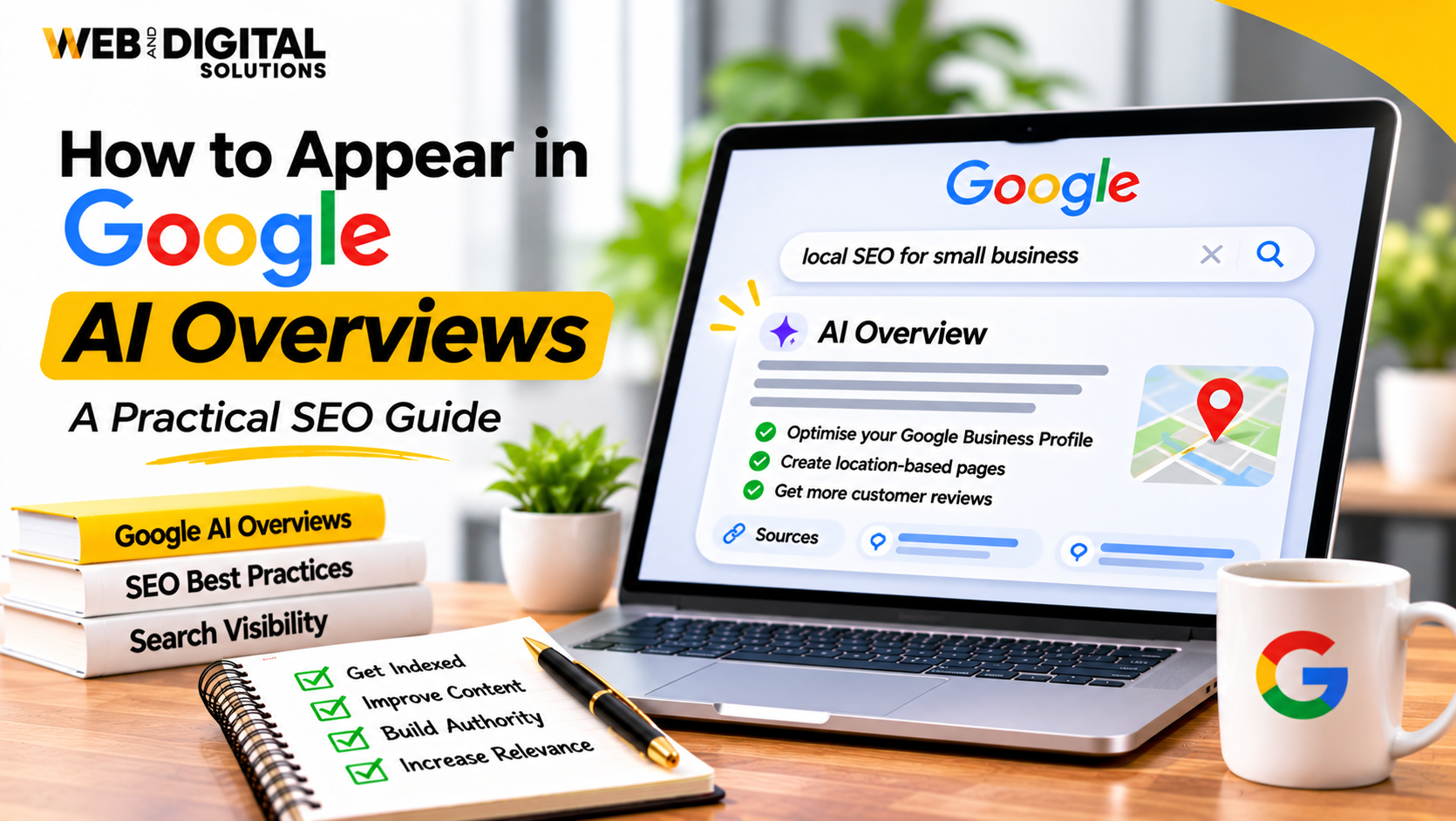
Google’s published guidance for AI features explains that existing SEO fundamentals continue to apply. Pages generally need to be indexed and eligible to appear in Google Search with a snippet to be eligible as supporting links in AI Overviews.
This demonstrates why businesses should not abandon traditional SEO to focus exclusively on AI visibility.
Consider what happens when a website has:
- Important pages blocked from crawling.
- Accidental noindex directives.
- Poor internal linking.
- Thin or outdated content.
- Unclear service descriptions.
- Inconsistent business information.
These problems can affect the website’s overall discoverability and usefulness, regardless of whether the business is targeting traditional search or AI-powered experiences.
A stronger approach is to maintain the SEO foundation while adapting content, brand visibility, and reporting to emerging search experiences.
7 Areas Where Traditional SEO and AI SEO Work Together
Instead of treating SEO and GEO as competing services, businesses should understand where the two approaches overlap.
1. Technical SEO and Website Accessibility
Search systems need access to relevant information.
Traditional SEO focuses on making pages accessible to search engine crawlers such as Googlebot. AI search optimisation also requires understanding the crawler and access requirements of individual platforms.
For example, OpenAI documents OAI-SearchBot for surfacing websites in ChatGPT search features.
Practical checks include:
- Review robots.txt rules.
- Check important page responses.
- Fix crawl errors.
- Review noindex directives.
- Check canonical tags.
- Maintain a logical website structure.
- Make important content accessible as readable text.
Different platforms have different crawler requirements, so website owners should review the relevant official documentation rather than assuming that one crawler setting controls every AI platform.
2. Content Quality and Search Intent
Both traditional SEO and AI SEO benefit from content that addresses genuine customer needs.
A page should not exist simply to repeat a keyword. It should help visitors understand a topic, evaluate an option, or solve a problem.
For example, a business offering local SEO services could publish content about:
- How local SEO works.
- What a local SEO audit includes.
- How Google Business Profile optimisation helps.
- How much local SEO may cost.
- Which factors influence local search visibility.
This content can attract organic visitors and provide useful information for AI-powered search experiences.
3. Clear Service Pages and Business Information
Your website should clearly explain what your business does.
A well-structured service page should describe:
- The service offered.
- The problems it addresses.
- Who it is suitable for.
- What the service includes.
- Relevant service locations.
- How customers can enquire.
For example, an agency offering AI SEO should explain its approach to technical accessibility, content optimisation, brand visibility, and AI citation monitoring.
Clear information helps visitors understand the business and gives search systems better context about the page.
4. Authority and Brand Credibility
Traditional SEO has long considered backlinks and reputation as important parts of a website’s overall authority.
For AI search, a credible and consistent brand presence also matters as a practical visibility objective.
Businesses can strengthen their online presence through:
- Relevant industry publications.
- Genuine customer reviews.
- Professional associations.
- Relevant local business references.
- Partnerships.
- Original research and useful resources.
- Consistent business information.
The goal should be to earn genuine references and build trust, not to generate artificial brand mentions or irrelevant backlinks.
5. Structured Data and Content Organisation
Structured data helps describe information on webpages in a standardised format.
Depending on the page, relevant schema types may include:
| Schema type | Purpose |
|---|---|
| Organization | Describes a business or organisation. |
| LocalBusiness | Describes a qualifying local business. |
| Service | Describes a business service. |
| Article / BlogPosting | Describes an article. |
| BreadcrumbList | Describes website navigation hierarchy. |
Structured data can support search engines’ understanding of your website, but it does not guarantee AI citations or special placement.
Also organise content with descriptive headings, focused paragraphs, relevant tables, and clear explanations. Good structure benefits readers first.
6. Internal Linking and Topic Coverage
Internal linking connects related pages and helps visitors explore your website.
For example, a business publishing an article about AI SEO could link to:
- Its AI search optimisation service page.
- A guide to Generative Engine Optimization.
- An article about ChatGPT website visibility.
- A guide to Google AI Overviews.
This creates a useful content network around related topics.
It also helps businesses develop stronger topical coverage rather than publishing isolated articles with no clear relationship.
7. Performance Tracking and Conversion Measurement
Both strategies need to be measured against business objectives.
Traditional SEO reporting commonly includes rankings, impressions, clicks, organic sessions, and conversions.
AI SEO monitoring may include brand mentions, website citations, cited URLs, and identifiable referral traffic.
The important step is to connect visibility with business results.
A rise in AI mentions is not automatically evidence of increased leads or sales. Track both visibility indicators and meaningful conversions.
Should Businesses Invest in SEO, GEO, or Both?
The right investment depends on your website’s current condition, customer behaviour, competition, and business objectives.
Not every business needs to invest heavily in every AI search platform immediately.
Use the following framework to decide where to focus.
| Business situation | Recommended priority |
|---|---|
| New website with limited search visibility | Build technical SEO and content foundations first. |
| Website has indexing or crawlability issues | Resolve technical SEO problems before expanding the campaign. |
| Business receives organic traffic but lacks qualified leads | Review search intent, landing pages, and conversion performance. |
| Business competes in a crowded local market | Strengthen local SEO, service pages, reputation, and relevant content. |
| Website has a solid SEO foundation | Add AI search visibility monitoring and GEO improvements. |
| Business wants to understand AI-driven discovery | Test relevant customer queries and track mentions, citations, and referral activity. |
For most businesses, the practical approach is to maintain traditional SEO while gradually expanding into GEO and AI search optimisation.
A Practical SEO and GEO Strategy for Small Businesses
A small business does not need a complicated AI search campaign to begin improving its visibility.
Start with a manageable plan.
Step 1: Review Your Existing SEO Foundation
Check whether your website has:
- Important pages indexed.
- Clear service descriptions.
- Relevant keyword targeting.
- A logical internal linking structure.
- Accurate business information.
- Useful and up-to-date content.
Fix significant technical problems before expanding into new content initiatives.
Step 2: Identify Customer Questions
Create a list of questions customers ask before choosing your products or services.
Organise them by intent:
- General information.
- Problem-solving questions.
- Service comparisons.
- Pricing and purchasing questions.
- Location-based searches.
Use these questions to plan useful service pages and supporting articles.
Step 3: Improve Existing Content
Before publishing more articles, review the pages you already have.
Improve outdated information, fill important gaps, clarify service descriptions, add relevant examples, and strengthen internal links.
Step 4: Build Relevant Brand References
Review your business information across relevant directories, professional profiles, industry websites, and local resources.
Focus on genuine references and accurate information.
Step 5: Start Monitoring AI Visibility
Select a consistent set of relevant customer questions.
Test them periodically across the AI platforms that matter to your audience.
Record brand mentions, website citations, cited URLs, and identifiable referral traffic.
Step 6: Connect Visibility to Business Results
Review whether your organic and AI-referred visitors are generating:
- Contact form submissions.
- Phone enquiries.
- Quote requests.
- Bookings.
- Purchases.
This helps you decide where additional investment is justified.
Common Mistakes Businesses Make When Switching to AI SEO
As AI search becomes more popular, businesses can waste resources by following unsupported optimisation advice.
| Mistake | Better approach |
|---|---|
| Stopping traditional SEO to focus only on AI platforms. | Maintain technical SEO, content quality, and organic visibility. |
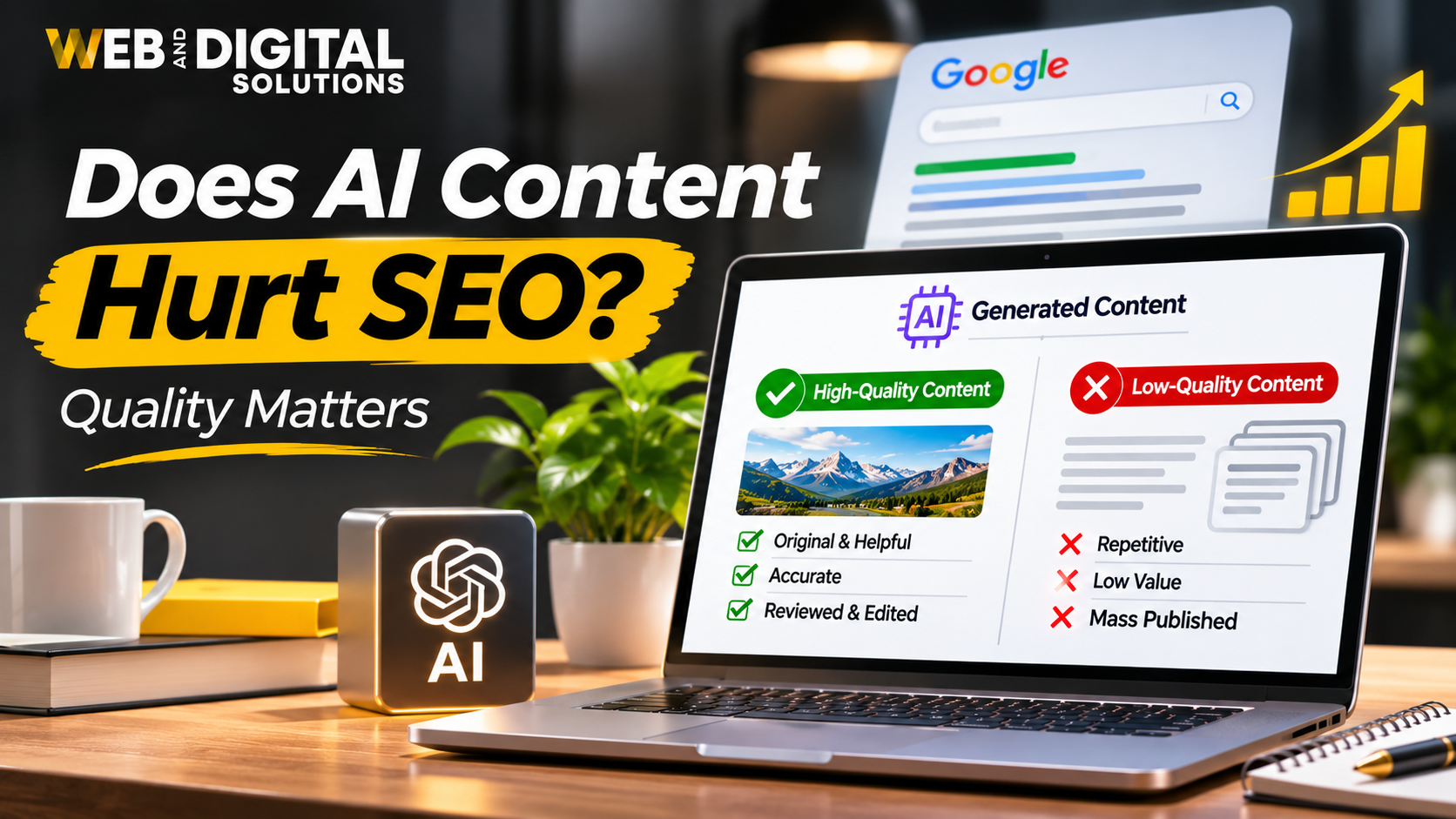
| Publishing large volumes of generic AI content. | Prioritise original, useful, accurate information. |
| Assuming Google rankings guarantee AI citations. | Track organic rankings and AI visibility separately. |
| Treating llms.txt as a guaranteed ranking factor. | Prioritise platform-specific crawler access and established SEO fundamentals. |
| Buying irrelevant backlinks and brand mentions. | Build genuine, relevant references and relationships. |
| Measuring only AI mentions. | Track qualified visits, enquiries, and conversions. |
| Expecting immediate AI search results. | Use a consistent monitoring and improvement process. |
A sustainable strategy is built on quality, relevance, accessibility, and credible business information.
How Web & Digital Solutions Combines SEO and AI Search Optimization
At Web & Digital Solutions, we believe businesses should prepare for evolving search experiences without abandoning the SEO practices that support their online visibility today.
Our approach combines traditional SEO foundations with practical AI search optimisation activities.
Depending on your website’s requirements, this may include:
- Technical SEO audits and crawlability reviews.
- Keyword research and search-intent analysis.
- On-page SEO and service-page optimisation.
- Content strategy and supporting blog development.
- Internal linking and website structure improvements.
- Local SEO and business information consistency.
- Relevant structured data implementation.
- AI crawler accessibility reviews.
- AI brand mention and citation monitoring.
- Organic and AI referral performance analysis.
Explore our SEO Services in London, Ontario and AI Search Optimization Services to learn how both approaches can support your business’s search visibility.
Final Thoughts: SEO and AI SEO Should Work Together
AI-powered search is changing how people discover information, research services, and compare businesses. But this does not mean traditional SEO is becoming irrelevant.
SEO helps your website become discoverable in organic search. GEO and AI SEO extend the strategy towards visibility in AI-generated answers, mentions, and citations.
The two approaches share important foundations: accessible webpages, useful content, clear information, relevant authority, and a strong website experience.
Rather than choosing one and abandoning the other, businesses should build a search strategy that supports both.
Invest in the SEO fundamentals first, then expand into AI search optimisation with clear objectives and measurable outcomes.
If you want to understand how traditional SEO and GEO can work together for your business, contact Web & Digital Solutions to discuss your search visibility goals.
Frequently Asked Questions About AI SEO and Traditional SEO
1. Does AI SEO replace traditional SEO?
No. AI SEO does not replace traditional SEO. Technical accessibility, useful content, search relevance, and website credibility remain important foundations. AI SEO extends the strategy to include visibility in AI-powered search and answer experiences.
2. What is the difference between SEO and GEO?
SEO focuses on improving visibility in traditional organic search results. GEO, or Generative Engine Optimization, focuses on improving the opportunity for a business’s information to be discovered, mentioned, or cited in AI-generated answers. Both approaches share several technical and content foundations.
3. Is AI SEO more important than traditional SEO?
Neither approach is universally more important. The right priority depends on your business, audience, website condition, and search behaviour. Most businesses should maintain their traditional SEO foundation while exploring relevant AI search opportunities.
4. Can a website rank on Google but not appear in AI search results?
Yes. Traditional organic rankings and AI-generated citations are different visibility outcomes. A website can rank for a keyword without being selected as a source in an AI-generated answer. AI platforms use their own retrieval and selection processes.
5. Does GEO improve Google rankings?
GEO is not a guaranteed Google ranking technique. However, GEO activities such as improving content quality, clarifying information, and strengthening website structure can also support broader SEO objectives when implemented appropriately.
6. Should small businesses invest in AI SEO?
Small businesses can explore AI SEO when their customers use AI tools to research services, compare providers, or find answers. However, businesses should first establish a technically sound website, useful content, and a clear traditional SEO strategy.
7. How can I measure AI SEO results?
Monitor brand mentions, website citations, cited pages, identifiable AI referral sessions, and qualified enquiries. Keep AI visibility metrics separate from traditional SEO rankings and traffic so you can evaluate each channel accurately.